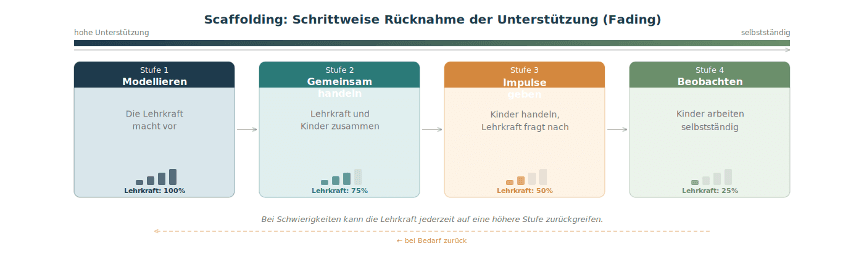
What happens to the experience of self-efficacy and the handling of mistakes when primary school children use an AI voice assistant as a research tool? The central idea: AI does not judge. Children can ask, try out, and correct — at their own pace.
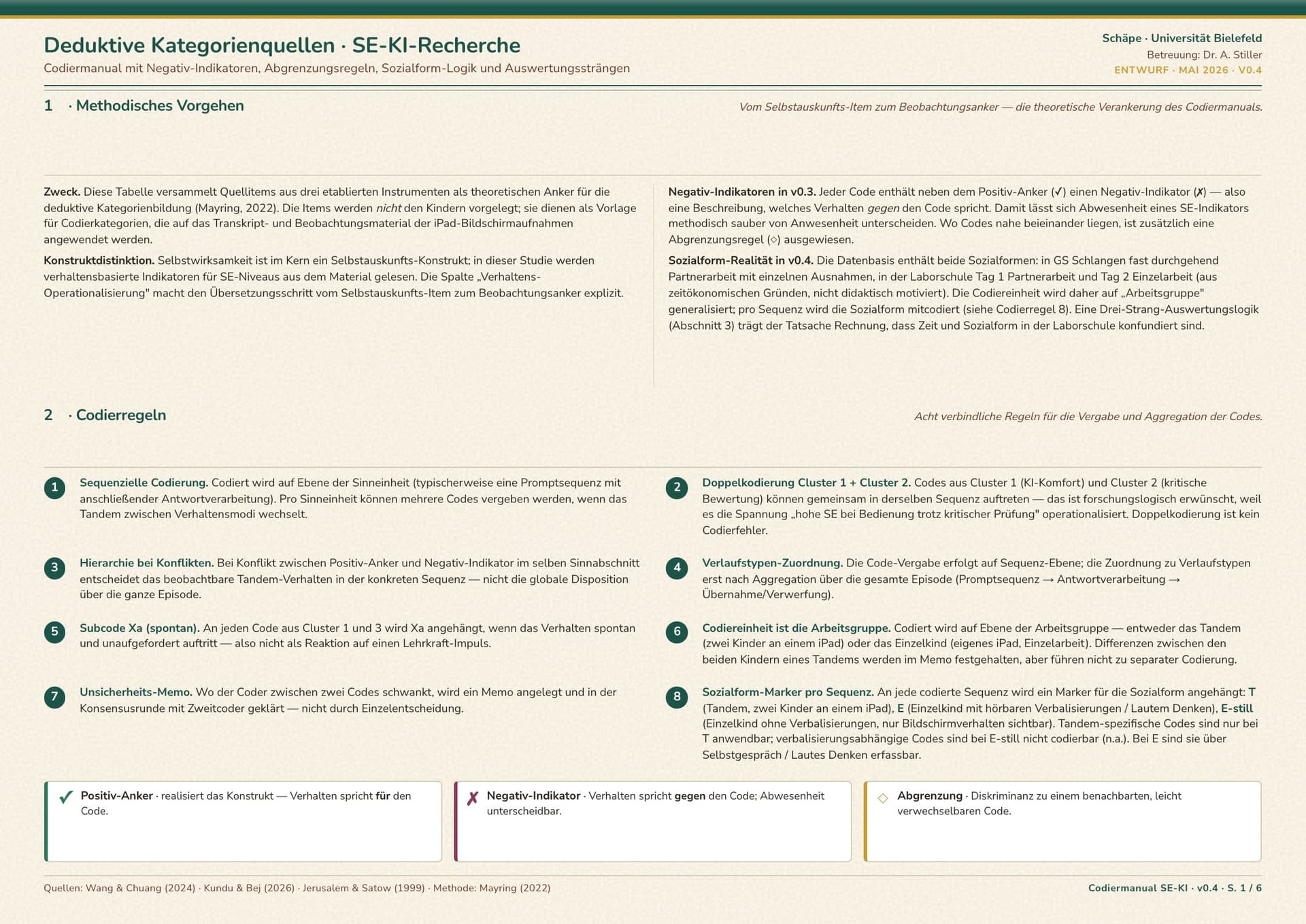
Methodological Approach
Empirical Data Collection
Data collection took place in real-world settings at multiple primary schools (e.g. GS Schlangen & Laborschule Bielefeld). During regular general studies classes, students used an age-appropriate AI assistant for research. All interactions were fully anonymized and documented in a GDPR-compliant manner to authentically capture their natural usage and experience of self-efficacy.
Qualitative Analysis & Progression Types
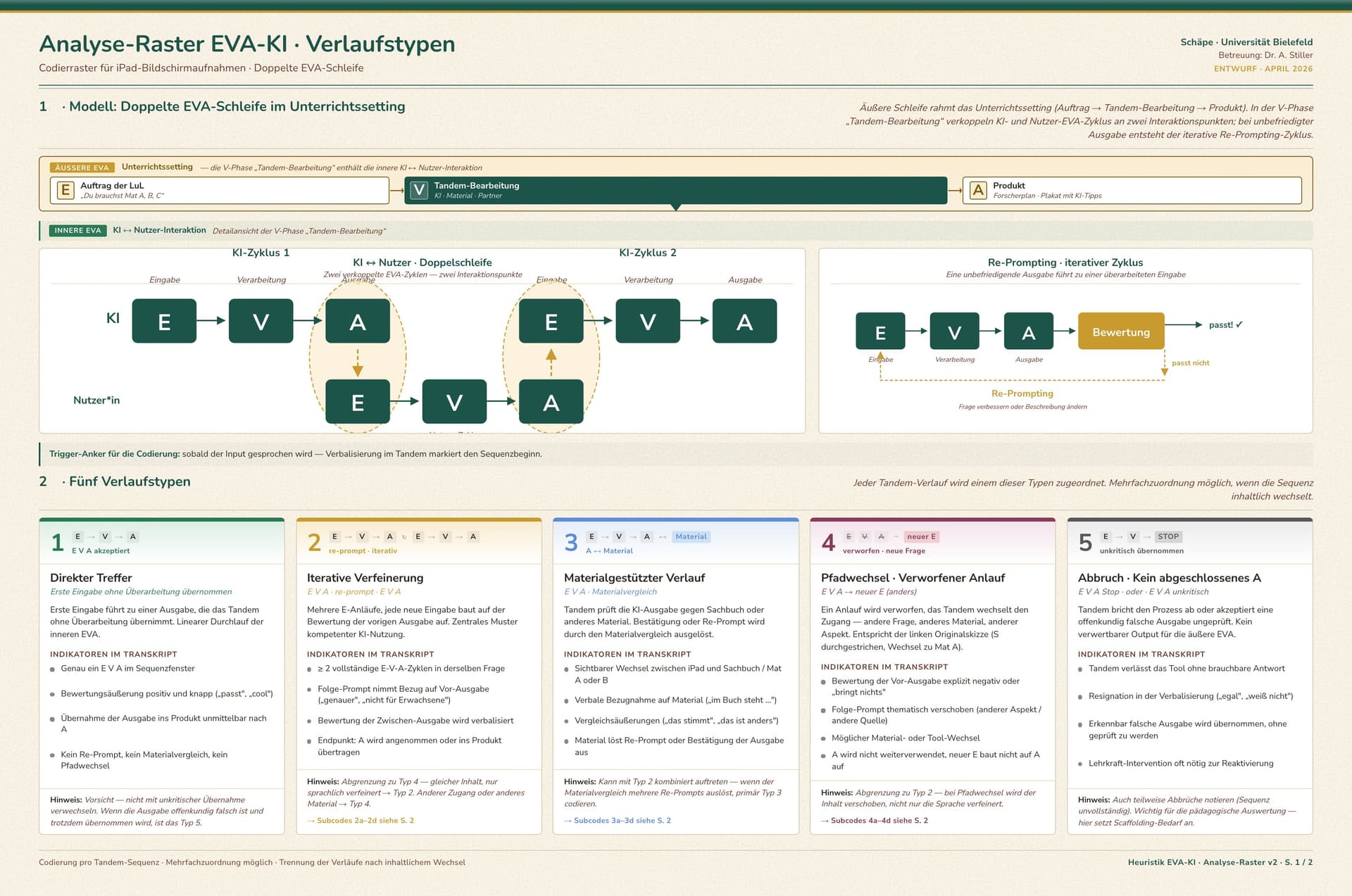
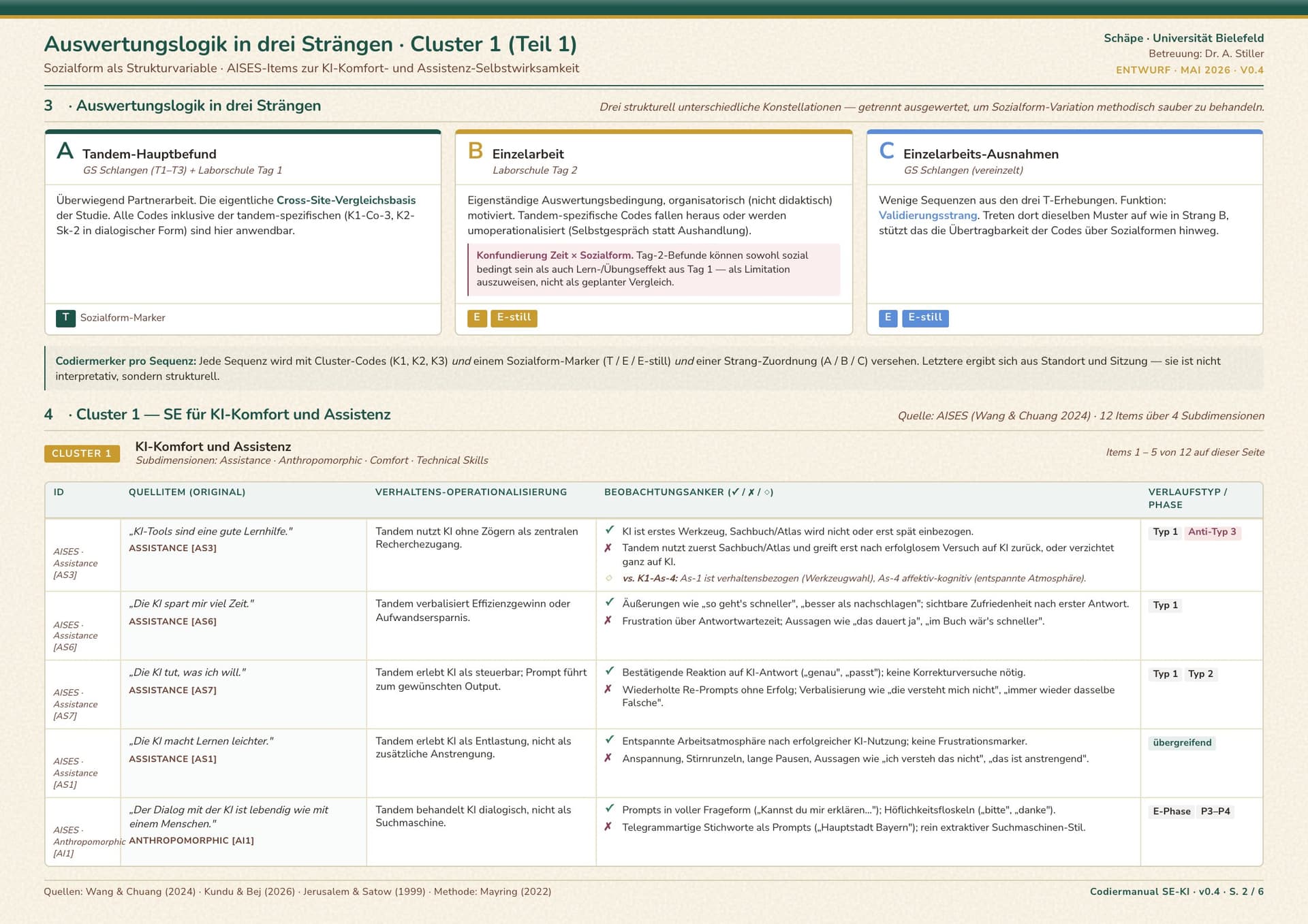
The data is analyzed qualitatively using MAXQDA. Through coding the interactions, specific progression types (Verlaufstypen) were identified, showing how children adapt search strategies and deal with errors. These cognitive processes can be modeled through the iterative and the double EVA cycle (Input – Processing – Output).